Use coupon code:
  Something exciting is coming soon – stay tuned to find out! 🚀✨
- « Previous blog
-
Grow My Business
-
May 19, 2026
-
May 25, 2026
-
1718
-
0
- Next blog »
Once you create an excellent website and start gaining traffic, the next thing that comes to mind is how to earn from it. When it comes to monetizing a WordPress site, two main strategies that most people rely on are Google AdSense and affiliate marketing. However, people often get confused about determining which one is better for their business.
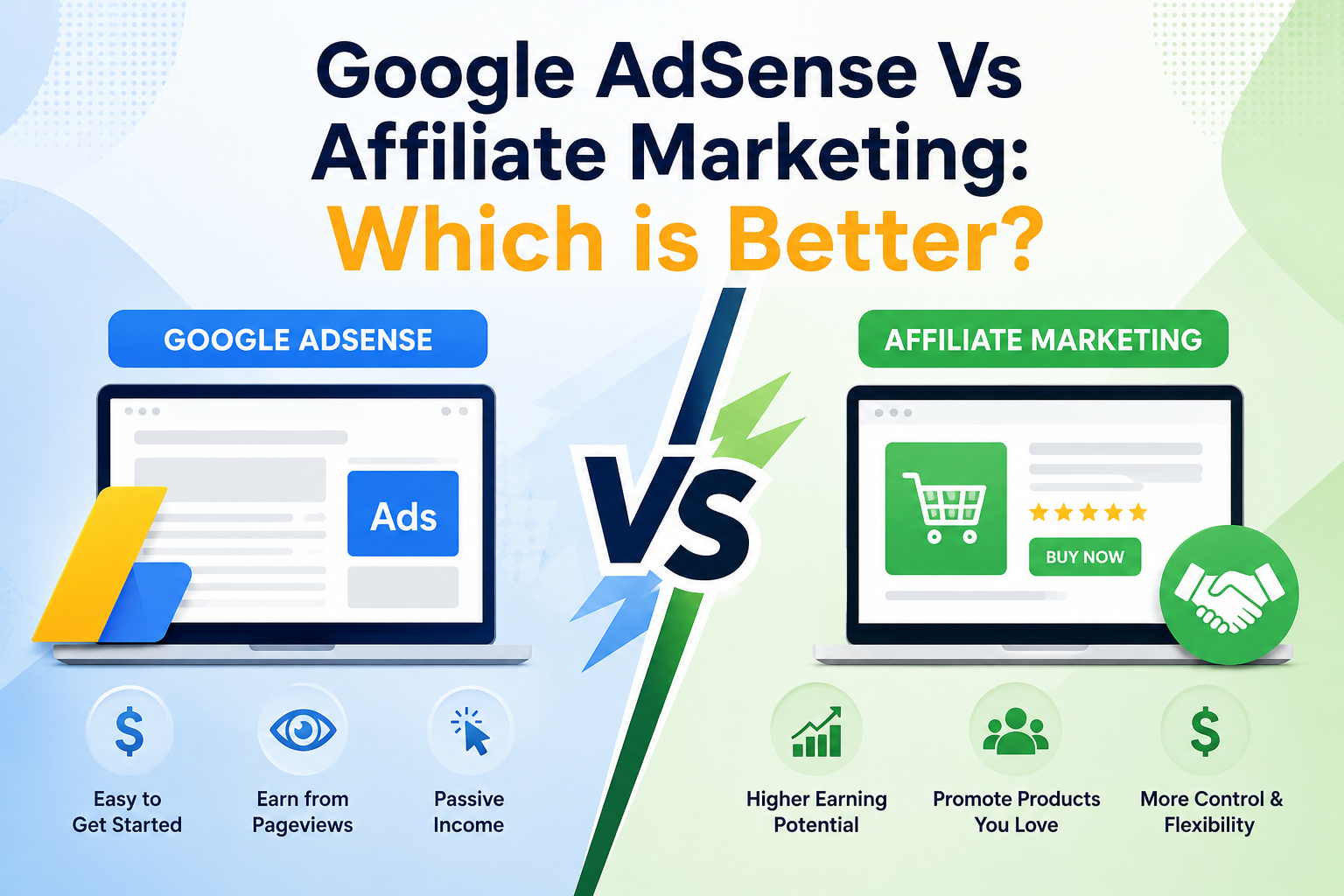
This is because what works well for a lifestyle blogger might not be suitable for a tech review based website.
To enlighten our readers about both the advertising systems, we have come up with this article, in which we have shared a detailed comparison between Google AdSense and affiliate marketing.
What Is Google AdSense?
Google AdSense is a free advertising program that enables bloggers, content creators and website owners to earn through their online content by showcasing their targeted Google ads.
How does it work?
You need to publish content on your website in terms of blogs, tools, videos, etc and Google will examine their quality to determine if they follow their policies. Once it is approved, you have to place Google ad code on your site, and Google displays relevant ads to your visitors automatically. You earn when users click on those ads. The amount you earn through this usually depends on things like your website traffic, audience location, and content niche.
You generally earn in two ways with Google AdSense: Cost per click and cost per thousand impressions.
What Is Affiliate Marketing?
Affiliate marketing is another popular promotional method in which you promote another company's product or services, and you get commission in return for every sale, lead, or action generated through the referral link on your website. You need to be a digital salesperson to utilize this marketing strategy.
Head-to-Head Comparison:
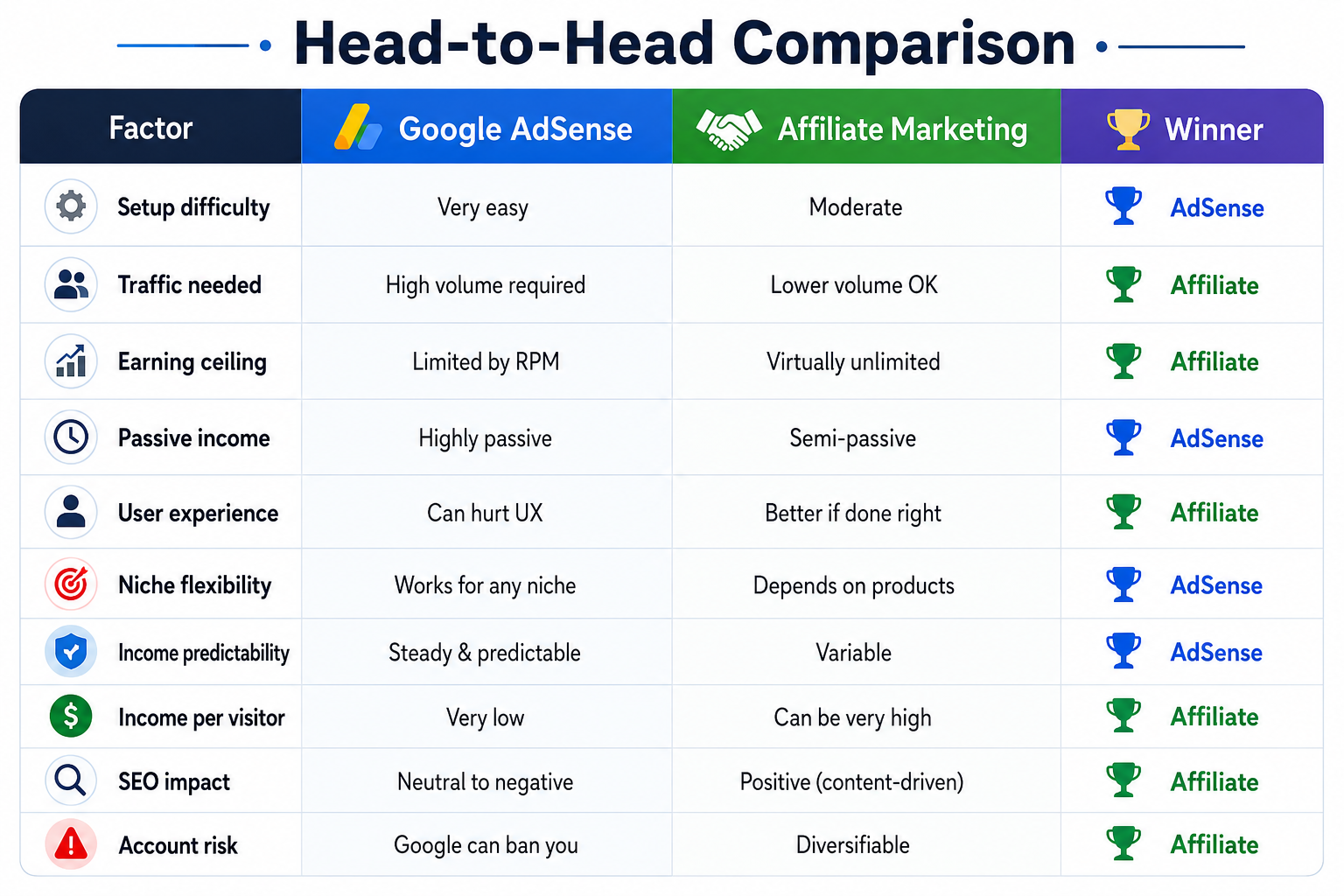
1. Google AdSense
Pros
- Easy to set up
- Fully automated — Google handles ad matching
- Earns money even without conversions
- Works across virtually any niche
- Reliable monthly payments
Cons
- Very low earnings per visitor (pennies)
- Needs massive traffic to earn well
- Ads slow down your website
- Poor user experience, high bounce rates
- Risk of account suspension
2. Affiliate Marketing
Pros
High income potential per conversion
- Scales without proportional traffic growth
- Aligns with quality content creation
- Diversified income across programs
- Can earn recurring commissions (SaaS)
Cons
- Requires audience trust to convert
- Programs can change or close overnight
- Needs strategic content planning
- Slow start — trust takes time to build
- Income is less predictable early on
Which Earns More? Real Income Potential
Considering the big picture, affiliate marketing carries more earning potential per visitor than Google AdSense which often ranges between 5x to 50x.
Consider the following example:
A site earning $2 RPM from AdSense needs 500,000 monthly visitors to make $1,000. An affiliate site with a single $50 commission product needs just 20 sales which is easily achievable with 2,000 targeted visitors.
However, this calculation does not work for general interest or news based websites. If your content is not relevant to the products and services you offer, AdSense may be your only option as there are no affiliate products to promote.
Income example at 50,000 monthly visitors:
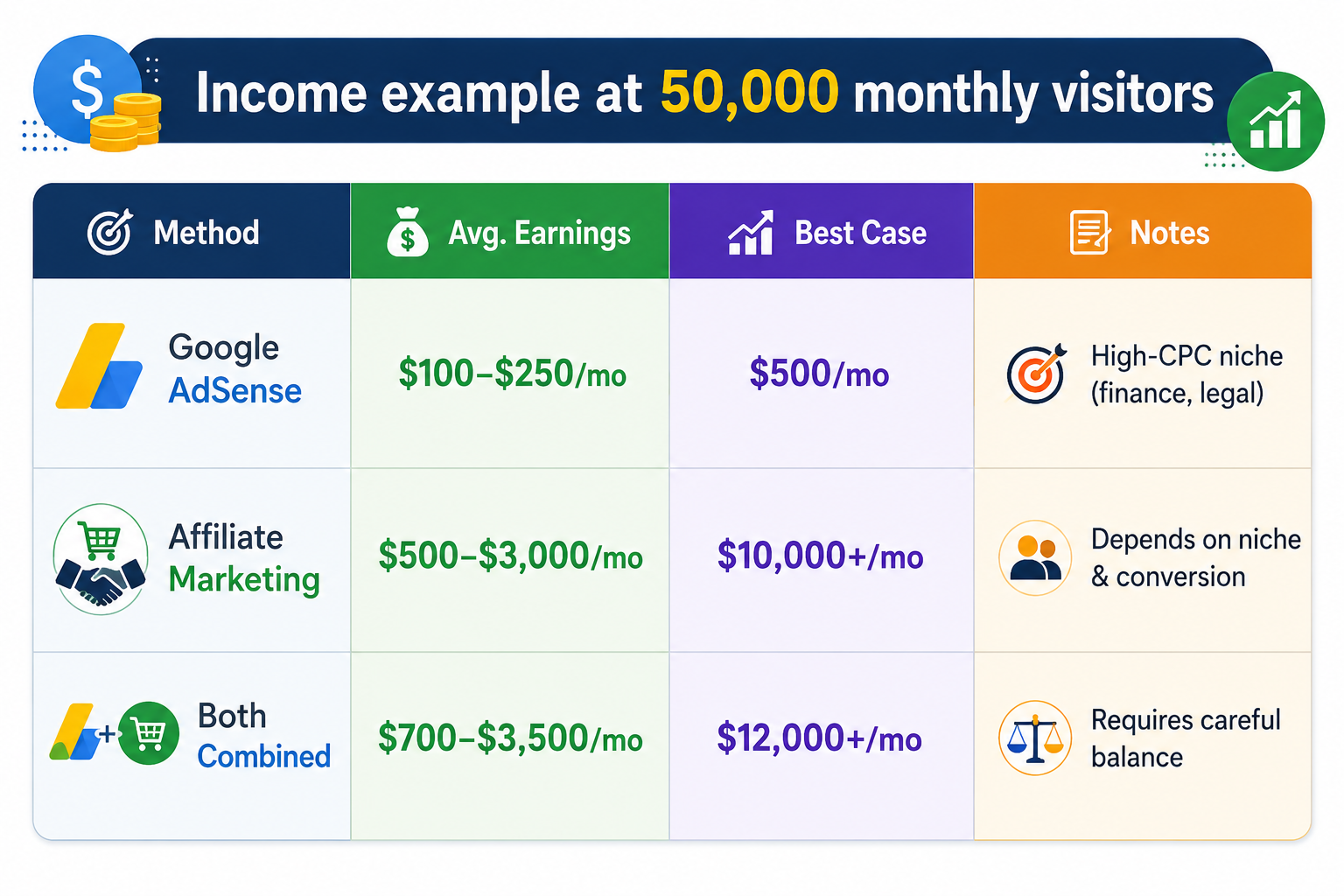
Best Fit by Niche & Traffic
Google AdSense and Affiliate marketing both have good earning capacity for website owners but which is the best often depends on the type of business you do through your website.
AdSense Works Best ForWebsites that deal in heavy traffic. For example, news or viral blog content based sites, general interest sites, etc. In simple words, it is the most suitable option for high traffic websites with low purchasing intent.
Affiliate Marketing Works Best ForWebsites that regularly post product reviews, comparisons, and where people look for reviews and recommendations before purchasing any product or services.
Can You Use Both Together?
The answer is "yes". You can use both the techniques as a part of your marketing strategy. However, the key is to maintain balance and placement. Keep in mind that having too many ads along with affiliate content create a cluttered experience for visitors which adversely affects your SEO rankings.
A mixed approach works here.You can use affiliate links within the body content where buying intent is highest, and place AdSense ads in areas like sidebars, footers, between non-commercial posts etc. If you do that, you would not have to sacrifice affiliate commissions for pennies on the click.
Important SEO consideration: Google has made it clear that a poor ad experience, intrusive ads, and slow page speed from ad scripts can negatively affect your Core Web Vitals which ultimately turns down your search rankings. Keep your ad load lean.
Note: If you run a WordPress events website, you can rely on WP Event Manager for a seamless event marketing management experience.
Our Verdict
Considering the detailed comparison between Google AdSense and affiliate marketing, we can say that affiliate marketing wins the game for most websites.
If your content is based on a specific niche and attracts readers with buying intent, affiliate marketing will outperform AdSense on every meaningful metric including income per visitor, revenue ceiling, user experience, and long-term scalability. Start with affiliate marketing, add AdSense selectively as a supplementary stream once traffic grows.
That said, AdSense is an ideal choice for you if you run a content driven site without clear product alignment, or if you are brand new and need passive income while your audience-building strategy matures. It is all about which strategy leads and which supports.
About the Author