Use coupon code:
  Something exciting is coming soon – stay tuned to find out! 🚀✨
- « Previous blog
-
Events
-
Jun 2, 2026
-
Jun 3, 2026
-
1318
-
0
- Next blog »
Your event budget planning in 2026 helps you create a roadmap that determines how you can plan your event, what you can do to execute it, and where you can utilize your resources. The 2026 Amex GBT Global Meetings and Event Forecast shows that almost 71% of event organizers expect the per-attendee cost to increase this year due to the rising expenses of food, beverage, labor and venues.
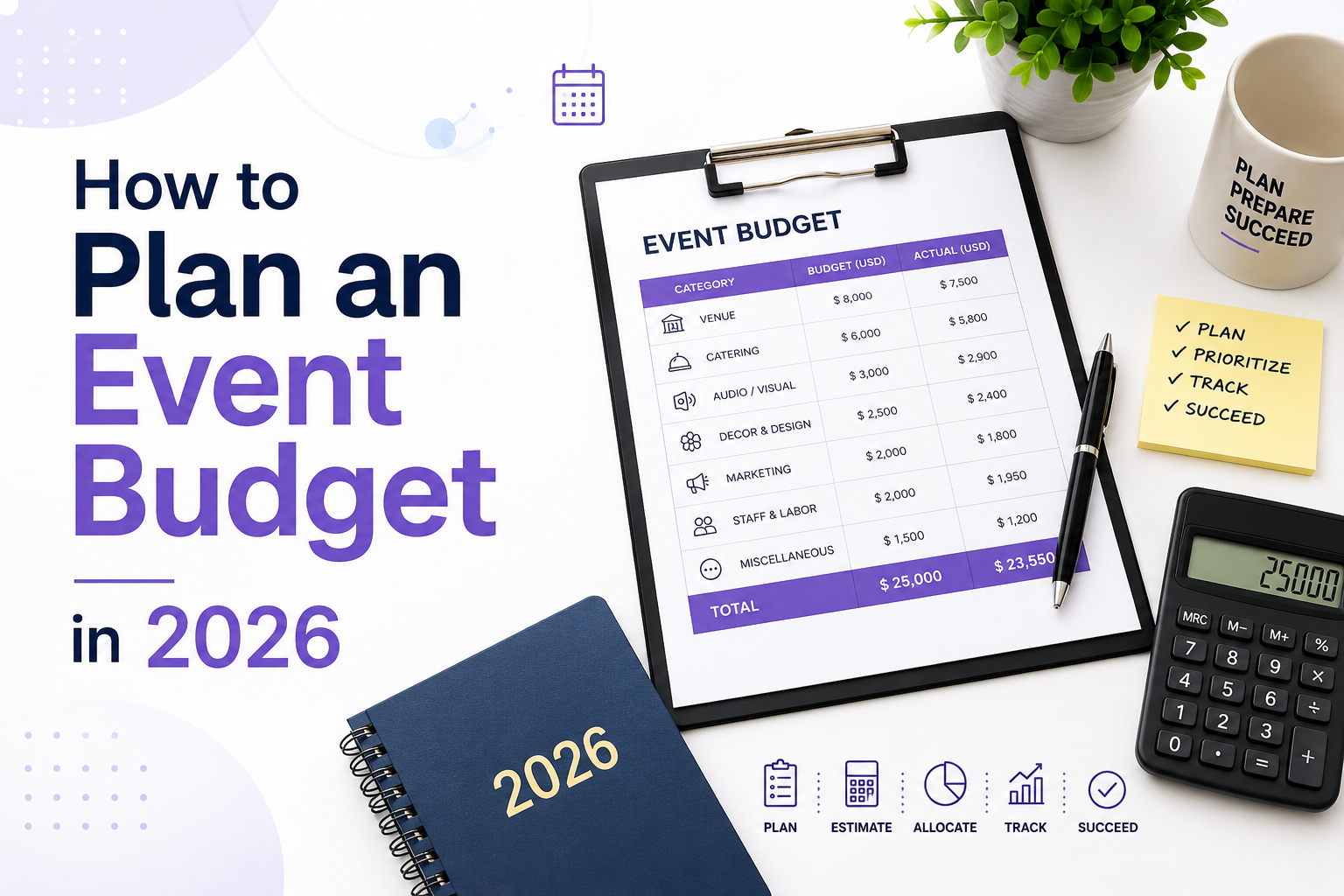
A well-planned event budget allows you to host events without crossing your financial boundaries. It also helps you gain the trust of sponsors by clearly showing them what they are receiving through authentic data.
In this article, we will take you through a detailed guide on event budget planning in 2026 with result driven strategies.
What is Event Budget Planning?
Event budget planning is all about creating a financial roadmap for your event that estimates, tracks, and controls all your event related expenses and revenue streams. With a detailed event budget, you will be able to understand how much you can spend, where you can allocate the money, and identify the potential sources of income.
The key elements of event budget planning include:
- Fixed cost: These are the costs that remain the same in every situation. Such expenses include license costs, rents of basic equipment, insurance, etc.
- Variable cost: As the name suggests, variable costs change based on different situations including the number of attendees, event staffing, food, etc.
- Total event revenue: This is the amount of money that you expect to generate from your event through ticket sales, sponsorships, booth fees, and more.
- Financial outcome of the event: The financial outcome of your event determines the amount of profit or loss you made from your event. You can get this by comparing your total event revenue to the total cost.
Benefits of Planning Event Budget in 2026
A clearly defined event budget enables you to utilize your financial capacity smartly and achieve measurable event outcomes.
Here's why event budget planning matters in 2026:
- When you have an idea about your expected event costs, you can easily manage your spending accordingly. It prevents overspending and ensures the optimum utilization of funds.
- It makes it easier for you to prioritize things before the event. For example if your aim is to provide quality event experiences to your attendees, you can spend more on engagement tools and entertainment.
- With an event budget, you will be able to communicate with your vendors more efficiently as you will have an idea about how much you can spend on different areas.
- As mentioned above, you can measure your event performance with proper data by deducting the total cost from the revenue.
Event Budget Planning Guide in 2026
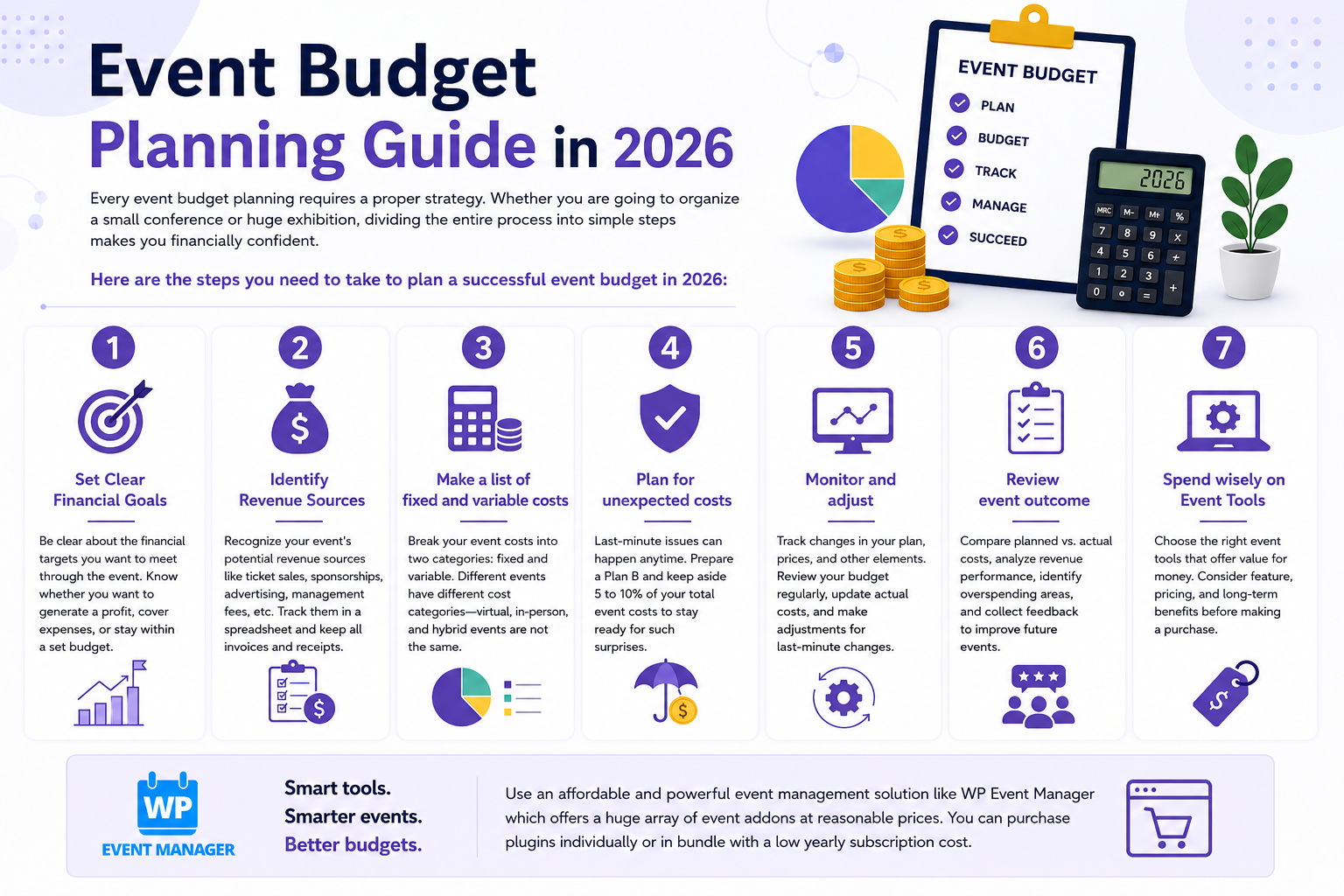
Every event budget planning requires a proper strategy. Whether you are going to organize a small conference or huge exhibition, dividing the entire process into simple steps makes you financially confident.
Here are the steps you need to take to plan a successful event budget in 2026:
1. Set Clear Financial Goals
Before you start preparing an event budget, you need to be clear about the financial targets that you want to meet through the event. In simple words, you must know whether you want to generate a profit, cover all your event expenses, or simply stay within a set budget.
For instance, if you want to earn a 20% profit from your three-day conference, you will need to set your event ticket prices and sponsorship fees based on the cost of your event venue, catering, and promotion.
2. Identify Revenue Sources
Recognizing your event's potential revenue sources is crucial to plan an event budget successfully. The most common event revenue sources include your ticket sales, advertising, sponsorships, management fees, etc.
Maintain a spreadsheet to monitor these areas and keep all invoices and receipts carefully as proofs for these numbers. This gives you an idea about how much revenue your event can generate and whether you will need support to cover expenses.
3. Make a list of fixed and variable costs
Once you identify your revenue sources, the next step is to make a list of all fixed and variable costs in your event. Start by breaking your event costs into two categories: fixed and variable.
Keep in mind that different types of events have different categories of fixed and variable costs. This means that the fixed and variable costs of a virtual event may not be the same as the fixed and variable costs of an in-person or hybrid event.
4. Plan for unexpected costs
Last-minute issues are truly unpredictable, and they can happen in a well-planned event as well. That is why you need to be prepared for such situations. Make sure to prepare a plan B for such situations. You can prepare by arranging additional equipment, hiring technical support staff, and extending venue hours if necessary.. Keep aside at least 5 to 10% of your total event costs to stay ready for such issues.
5. Monitor and adjust
Your event budget is likely to evolve based on your event plan changes, rising prices, and changes in other event elements. You must track these changes to create an accurate event budget.
Consider the following tips to keep pace with these changes:
- Review your event budget regularly during the planning stage.
- Keep updating your actual and planned costs by collecting invoices.
- Make adjustments for any last-minute changes
6. Review event outcome
This is a post event evaluation to understand your event's financial performance. At this step you need to compare your planned budget with the actual event cost. This will tell you how successful you were successful in meeting your event revenue goal.
- Identify the areas where you think you have spent more than what was required
- Check all your revenue streams to find out how well they have performed.
- At last, collect feedback from your event team, attendees and vendors to understand your strengths and weaknesses.
7. Spend wisely on Event Tools
The event tools you choose also influence your event budget. Do not spend money on just any event tool only because it appears useful. Check the prices and features carefully to understand their worth.
You can rely on WordPress event management software like WP Event Manager which offers a huge array of event addons at reasonable prices. You can purchase plugins individually or in bundles with a low yearly subscription cost.
Wrapping up
We hope that the event budget planning guide will help you create a successful event budget for your next event. Make sure you cover all the above mentioned steps to get the accurate results.
About the Author