Use coupon code:
  Something exciting is coming soon – stay tuned to find out! 🚀✨
- « Previous blog
-
Events
-
Jun 4, 2026
-
Jun 5, 2026
-
1432
-
0
- Next blog »
Eventbrite is one of the most popular event ticketing platforms that many event organizers worldwide rely on. However, with the constant development of the event industry, event organizers are now facing the question if SaaS-based event ticketing platforms like Eventbrite is the right choice for a long-term solution.
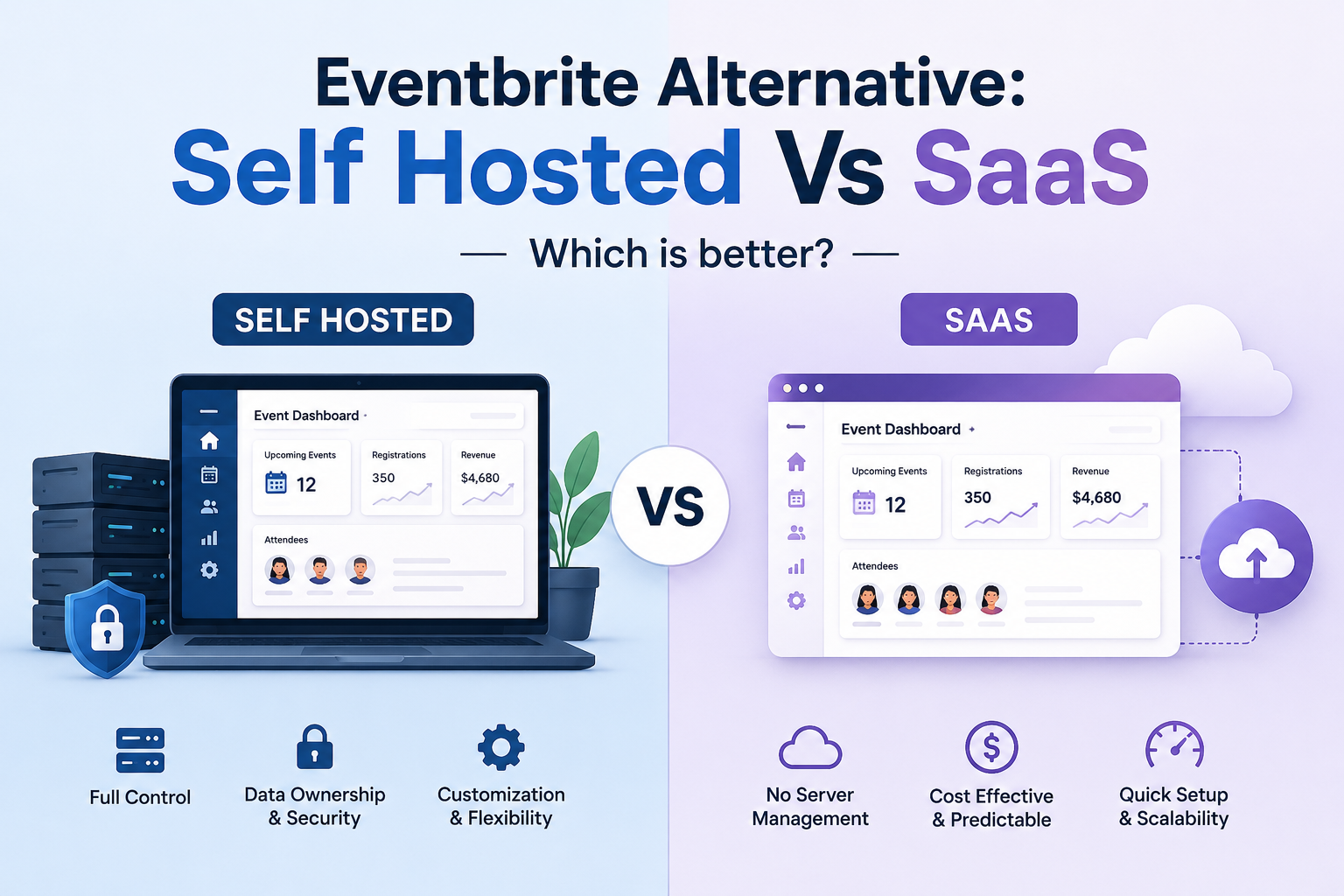
Whether you are organizing conferences, workshops, webinars, festivals, or community gatherings, your platform directly affects the number of registrations, attendee experience, marketing efforts, and revenue.
For years, many organizers relied on SaaS ticketing platforms because they offered a quick way to launch events online. However, rising costs, limited access to data, and growing demand for customization have pushed many businesses to search for an Eventbrite alternative.
But when exploring alternatives, another question appears:
Should you choose a self hosted event platform or continue using a SaaS event platform?
The answer is not always straightforward.
Both approaches have strengths and weaknesses. The right choice depends on your goals, event size, budget, growth plans, and the level of control you want on your events.
In this article, we have shared a detailed guide on the differences between self hosted and SaaS event platforms and why event organizers are moving towards Eventbrite alternatives. Before diving in, let us first introduce you to SaaS event platforms.
What Is a SaaS Event Platform?
A SaaS event platform, or Software as a Service platform, is a cloud based solution where the provider hosts and manages the software while organizers access it online.
Most SaaS ticketing platforms allow users to:
- Create events quickly
- Sell tickets online
- Manage attendee registrations
- Process payments
- Send automated emails
- Generate reports and analytics
- Manage check ins
The biggest attraction of SaaS platforms is convenience. Most organizers can create events without worrying about technical setup or website management.
However, convenience often comes with trade offs.
What Is a Self Hosted Event Platform?
A self-hosted event platform allows organizers to build and manage their events directly on their own website.
Instead of relying entirely on third party infrastructure, organizers enjoy control over their platform, data, branding, and workflows.
A self-hosted event management solution usually provides:
- Complete website ownership
- Flexible customization
- Branding control
- Data ownership
- Integration flexibility
- Greater scalability
Businesses looking for a long term Eventbrite alternative often consider self hosted solutions because they offer greater independence and customization opportunities.
Why Are Event Organizers Searching for an Eventbrite Alternative?
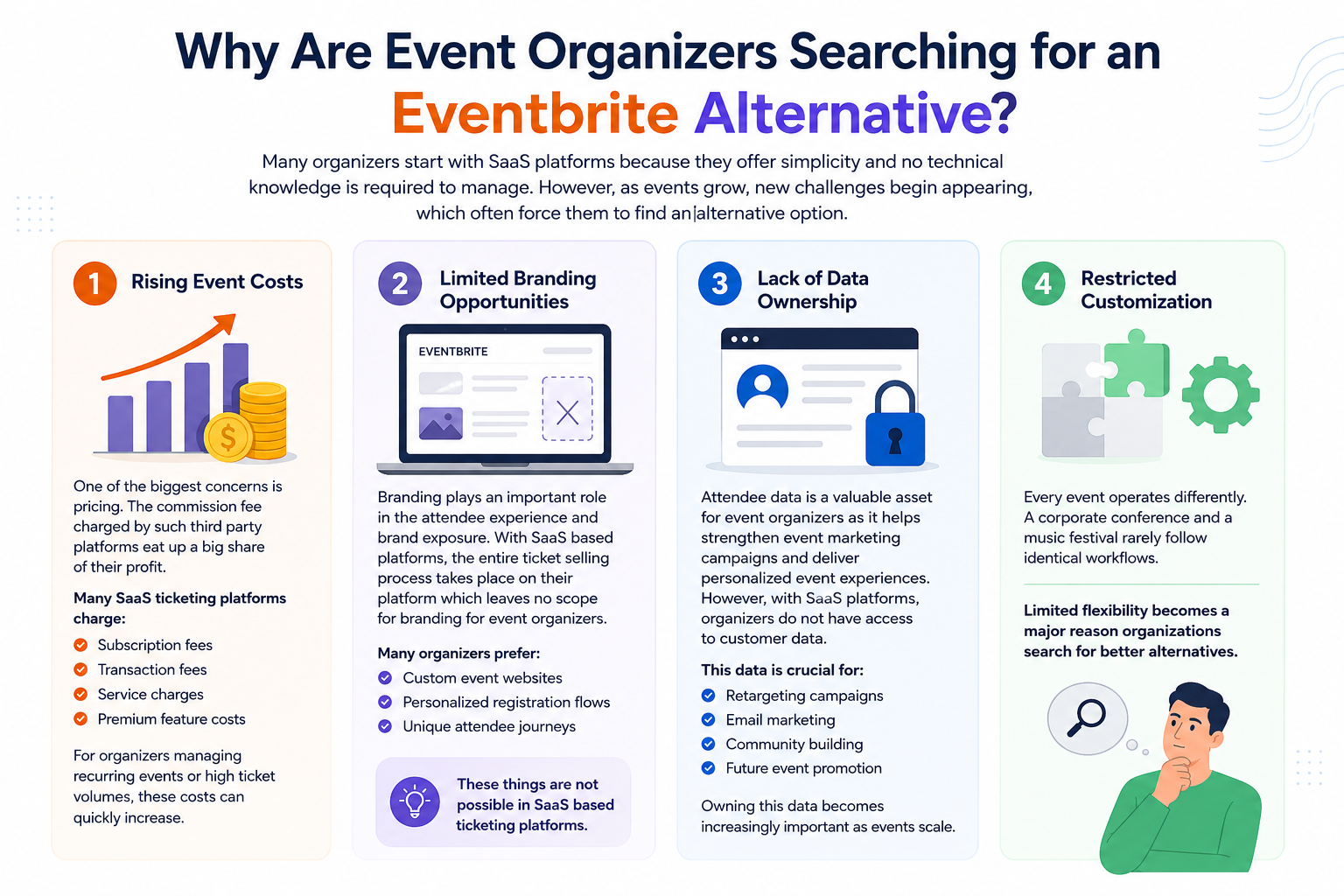
Many organizers start with SaaS platforms because they offer simplicity and no technical knowledge is required to manage. However, as events grow, new challenges begin appearing, which often force them to find an alternative option.
1. Rising Event Costs
One of the biggest concerns is pricing. The commission fee charged by such third party platforms eat up a big share of their profit.
Many SaaS ticketing platforms charge:
- Subscription fees
- Transaction fees
- Service charges
- Premium feature costs
For organizers managing recurring events or high ticket volumes, these costs can quickly increase.
2. Limited Branding Opportunities
Branding plays an important role in the attendee experience and brand exposure. With SaaS based platforms, the entire ticket selling process takes place on their their platform which leaves no scope for branding for event organizers.
Many organizers prefer:
- Custom event websites
- Personalized registration flows
- Unique attendee journeys
These things are not possible in SaaS based ticketing platforms. .
3. Lack of Data Ownership
Attendee data is a valuable asset for event organizers as it helps strengthen event marketing campaigns and deliver personalized event experiences. However, with SaaS platforms, organizers do not have access to customer data.
This data is crucial for:
- Retargeting campaigns
- Email marketing
- Community building
- Future event promotion
Owning this data becomes increasingly important as events scale.
4. Restricted Customization
Every event operates differently.A corporate conference and a music festival rarely follow identical workflows.
Limited flexibility becomes a major reason organizations search for better alternatives.
Self Hosted Vs SaaS Event Platforms: Key Differences
1. Cost Comparison
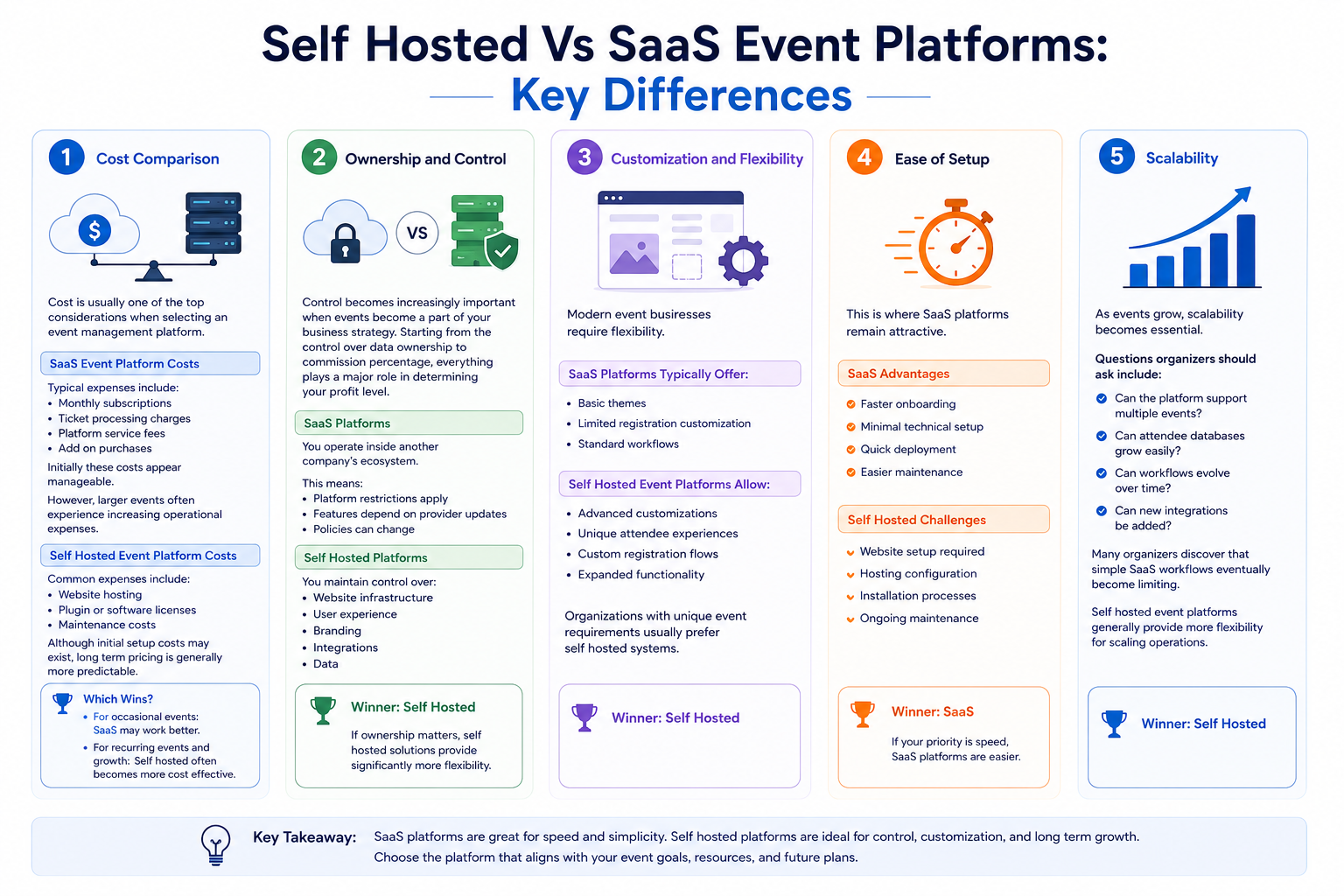
Cost is usually one of the top considerations when selecting an event management platform.
SaaS Event Platform Costs
Typical expenses include:
- Monthly subscriptions
- Ticket processing charges
- Platform service fees
- Add on purchases
Initially these costs appear manageable.
However, larger events often experience increasing operational expenses.
Self Hosted Event Platform Costs
Common expenses include:
- Website hosting
- Plugin or software licenses
- Maintenance costs
Although initial setup costs may exist, long term pricing is generally more predictable.
Which Wins?
For occasional events: SaaS may work better.
For recurring events and growth: Self hosted often becomes more cost effective.
2. Ownership and Control
Control becomes increasingly important when events become a part of your business strategy. Starting from the control over data ownership to commission percentage, everything plays a major role in determining your profit level.
SaaS Platforms
You operate inside another company's ecosystem.
This means:
- Platform restrictions apply
- Features depend on provider updates
- Policies can change
Self Hosted Platforms
You maintain control over:
- Website infrastructure
- User experience
- Branding
- Integrations
- Data
Winner: Self Hosted
If ownership matters, self hosted solutions provide significantly more flexibility.
3. Customization and Flexibility
Modern event businesses require flexibility.
SaaS Platforms Typically Offer:
- Basic themes
- Limited registration customization
- Standard workflows
Self Hosted Event Platforms Allow:
- Advanced customizations
- Unique attendee experiences
- Custom registration flows
- Expanded functionality
Organizations with unique event requirements usually prefer self hosted systems.
Winner: Self Hosted
4. Ease of Setup
This is where SaaS platforms remain attractive.
SaaS Advantages
- Faster onboarding
- Minimal technical setup
- Quick deployment
- Easier maintenance
Self Hosted Challenges
- Website setup required
- Hosting configuration
- Installation processes
- Ongoing maintenance
Winner: SaaS
If your priority is speed, SaaS platforms are easier.
5. Scalability
As events grow, scalability becomes essential.
Questions organizers should ask include:
- Can the platform support multiple events?
- Can attendee databases grow easily?
- Can workflows evolve over time?
- Can new integrations be added?
Many organizers discover that simple SaaS workflows eventually become limiting.
Self hosted event platforms generally provide more flexibility for scaling operations.
Winner: Self Hosted
When Should You Choose a SaaS Ticketing Platform?
A SaaS ticketing platform may work best if:
- You organize occasional events
- You need immediate deployment
- Technical resources are limited
- Maintenance is not desirable
- You are testing new event ideas
Simplicity often matters more during early stages.
When Should You Choose a Self Hosted Event Platform?
A self hosted event platform may be better if:
- Events are a major revenue channel
- You require advanced customization
- Branding is important
- You run recurring events
- Long term scalability matters
- You want complete ownership
Businesses focused on growth typically benefit from greater flexibility.
Questions to Ask Before Selecting an Eventbrite Alternative
Before choosing your platform, consider these questions:
1. How important is attendee data ownership?
If future marketing depends on attendee information, ownership matters.
2. How frequently do you run events?
Frequent events can make transaction fees expensive.
3. Do you require custom workflows?
Complex registration systems may need flexibility.
4. What matters most?
- Faster setup
- Lower costs
- Better branding
- Ownership
- Scalability
Your priorities usually determine the correct solution.
Build your own event ticketing platform with WP Event Manager
WP Event Manager allows you to create a fully functional WordPress event ticketing marketplace where organizers can post and sell event tickets, and you can earn commission in return. For a detailed guide on the same, read our previous article "How to create an event ticketing platform?"
Final Thoughts: Which Eventbrite Alternative Is Better?
There is no universal answer.
The best Eventbrite alternative depends entirely on your business goals.
Choose a SaaS event platform if:
- Speed matters most
- You need simple setup
- You run occasional events
Choose a self hosted event platform if:
- Ownership matters
- Scalability is important
- You want full control
- You need flexibility for long term growth
Many organizers begin with SaaS because it is easy.
Many eventually move toward self hosted solutions because they need more control.
About the Author