Use coupon code:
  Something exciting is coming soon – stay tuned to find out! 🚀✨
- « Previous blog
-
Events
-
Mar 26, 2026
-
Mar 26, 2026
-
939
-
0
- Next blog »
Organizing micro events is one of the most prominent event industry trends in 2026. If you want to boost your event ROI without investing much in your events, micro events are the best option for you. Micro events mainly focus on purposeful engagement, useful networking, and personalization. The number of attendees in such events ranges between 50 and 200, which makes it easier for people to connect and build long-term relationships that are mutually beneficial.
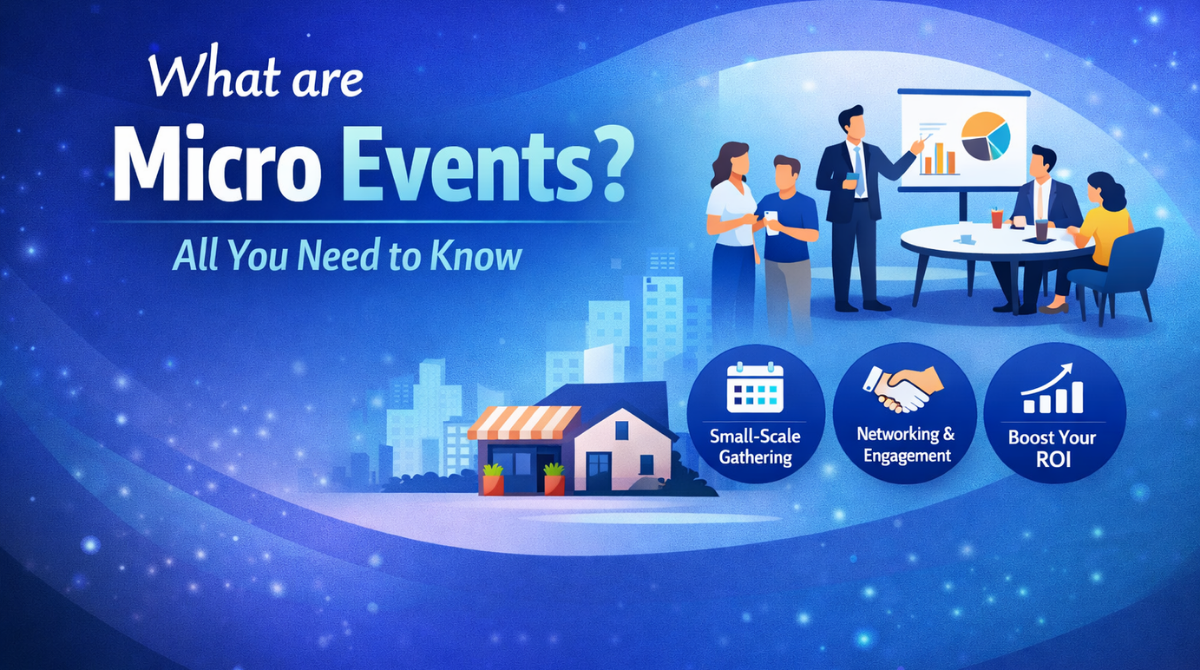
The term micro events is not new in the industry, but the growing use of digital platforms, evolving consumer behavior, and the need for personalization have made the compact event experience more popular than ever. The goal of micro events is to provide a quality experience to attendees through smart networking and interactions.
In this article, we have shared a detailed guide on micro events that includes, micro events meaning, its types, and more. Let us explore.
What are micro events?
Micro events signify small-scale gatherings that prioritize networking and engagement. They simply follow the principles of "quality over quantity". Research says the demand for such small-scale events has increased by 23% in recent years. These events are generally based on a single theme, topic, or objective that is designed for a specific group of people.
Some micro event examples include expert-driven workshops, specialized networking dinners, intimate product launches, etc.

Key features of micro events include:
- Small number of attendees.
- High level of engagement.
- Lower investment.
- Better ROI
- Based on single topic or objective.
Now that you have a clear idea about micro events, let us discover different types of micro events.
Types of micro events
- VIP customer dinners
This type of micro event is exclusively organized for invited guests only. The number of attendees usually ranges between 5 to 15. A premium location or a private venue is selected to host such micro events. The main objective behind these events is to strengthen the bond between a brand and its customers.
- Strategy sessions
Strategy sessions are based on working sessions where major company decisions are made. These are goal driven events mostly attended by company stakeholders, decision makers, and subject matter experts. The number of participants remains within 10 who engage in discussions to overcome specific challenges and find solutions to issues.
- Panel discussions
This is another type of micro event or small scale gathering which is led by a presenter and 2 to 5 panelists and attended by no more than 20 participants. Panelists or experts share their thoughts, opinions, and experiences on a specific topic that educate audiences and build credibility.
- Exclusive demo sessions
Exclusive demo sessions are another invite-only micro events that are hosted to show product or service demos for a specific group of audiences. Such micro events highlight specific customer pain points and describe how well the products or services offered by the company solve them. The goal of such events is to encourage people to buy those products, build brand credibility and trust.
- Community meetups
Community meetups attract a small number of people who share common interests or have the same professional background. These are casual meetups which take place in cafes, or co-working spaces. They offer scope for networking and encourage discussions that develop a sense of community in attendees.
Benefits of micro events
Some of the biggest benefits of micro events include:
- Cost effectiveness: Such intimate events invite a limited number of attendees reducing the need for a huge venue, catering arrangements and more. .
- Flexibility: It allows quicker planning and adaptability to changing situations.
- Boost engagement: Offers better scope to attendees to interact and build stronger connections.
- Valuable attendee data and feedback: Small-scale events means less number of attendees which makes it easier for organizers to manage attendee data and collect honest feedback useful for making future event improvements.
Detailed guide to planning micro events
It is to be noted that micro events are not considered a replacement for big conventional events. They offer organizers a scope to reach a wider audience, increase ROI and build brand credibility without crossing their budget.
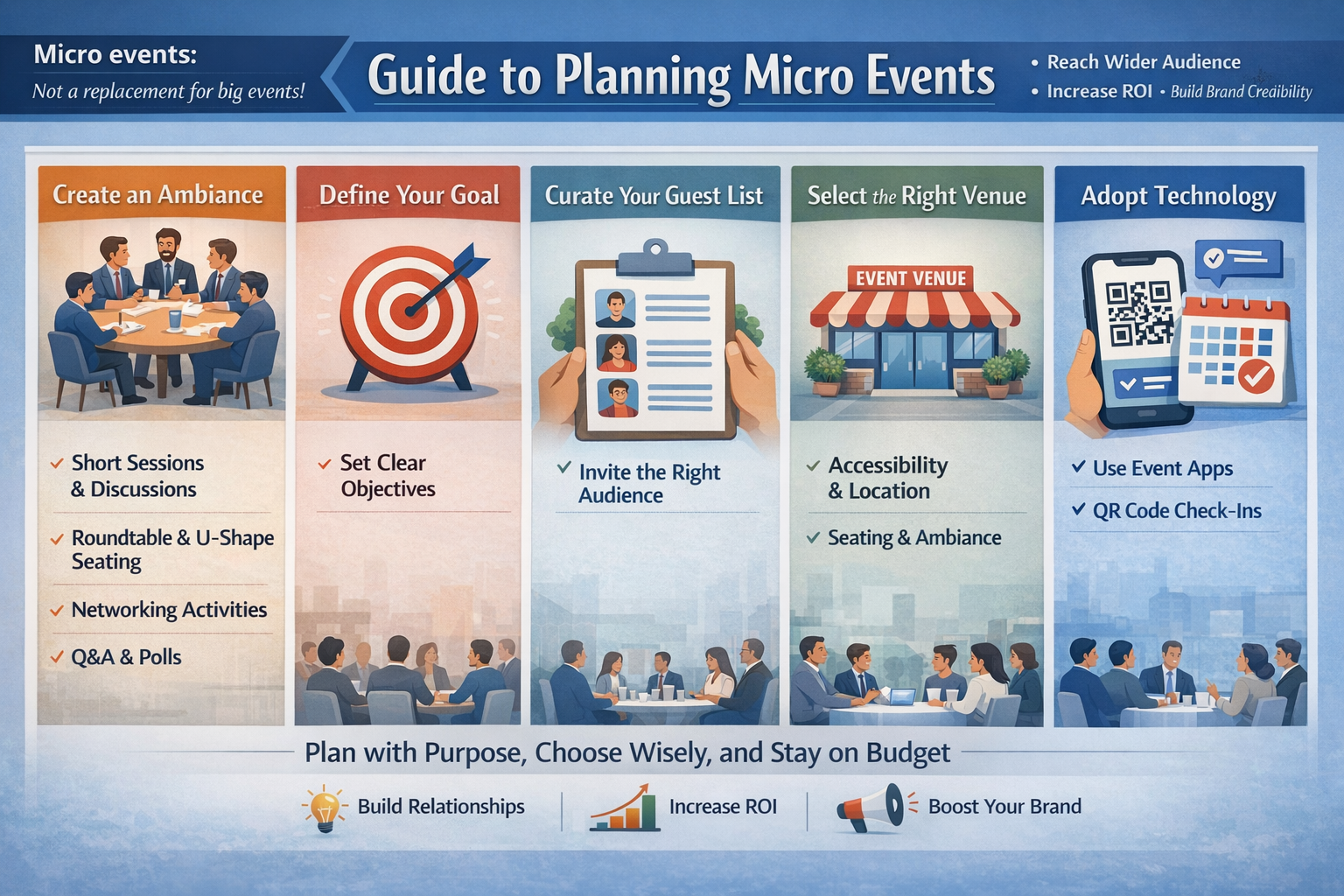
Here is a detailed guide to planning a micro event:
1. Define your goal
Hosting a micro event typically starts with your event goal or objective. This means you need to have clarity on why you want to host a micro event or its main purpose. Whether your goal is to build relationships, increase ROI, showcase products or spread brand awareness, all your event decisions must be guided by that purpose.
Following an event trend blindly without having any solid purpose will lead to confusion only and adversely affect your business reputation.
2. Curate your guest list
When it comes to hosting micro events, you need to carefully create a guest list as it is one of the most crucial steps in this journey. Instead of prioritizing the number of attendees, focus on inviting the right mix of audiences.
Consider the following questions while creating your micro event guest list:
- Who do you want to strengthen your relationship with?
- Which audiences would benefit the most by attending?
- Who could contribute their valuable perspectives?
- What mix of roles would engage the most in your event?
Answering these questions will help you create a guest list that will perfectly suit your event purpose and make it successful.
3. Select the right venue
The venue plays a pivotal role in making or breaking your micro events. You must look for venues that align with your event goals, audiences, and the type of event you are hosting. Determine at first whether your event needs a formal setup or a casual one.
Consider the following factors before finalizing a venue:
- Accessibility.
- Location.
- Seating arrangements.
- Ambiance.
All of these factors highly influence the comfort and mood of your audiences. A suitable venue not only impresses attendees but also makes them comfortable to engage in any conversation or discussion.
4. Adopt technology
In this tech-driven era, events are incomplete without the right tools. They not only make event management simple for organizers but also streamline the attendee journey. You can automate event check-ins with QR codes and manage your micro events through a mobile app.
We recommend a WordPress event management plugin like WP Event Manager that offers a huge array of features and add-ons to help you manage events automatically. Starting from enabling QR code check-ins to managing the entire process through a mobile app, it offers everything that you need to automate the event management process.
5. Create an ambiance for interactions
No matter how beautiful your venue is, if your guests do not get the opportunity to interact, then the purpose of your micro event will not be fulfilled. As an event organizer, you need to ensure that you give attendees the chance to discuss, participate, and engage in conversations.
Here are some tips to help you create a perfect ambiance for interactions in your micro events:
- Avoid long presentations and use shorter segments and open discussions.
- Keep an eye on your seating arrangements. Generally roundtable and U-shaped setups encourage people to talk.
- Add networking activities.
- Adopt event gamification.
- Include Q & A sessions, and polls to ensure everyone's participation.
Wrapping up
Micro events are undoubtedly beneficial if planned properly using the right tools. We hope that our guide on hosting micro events will help you set up successful micro events for your business. Start planning by having clear event goals, and proceed with curating your guest list, choosing the right venue, and tools. Do not forget to create a suitable ambiance for your audiences to help them interact effectively.
About the Author