Use coupon code:
  Something exciting is coming soon – stay tuned to find out! 🚀✨
-
Events
-
Apr 7, 2026
-
Apr 7, 2026
-
7
-
0
- Next blog »
Event risk management is all about being prepared for the unexpected during an event. It is one of the most vital aspects of events that is often overlooked, as most event organizers focus on choosing an excellent venue, managing guests, and creating a memorable experience for attendees. However, when things go wrong, they are forced to play catch-up instead of staying in control.
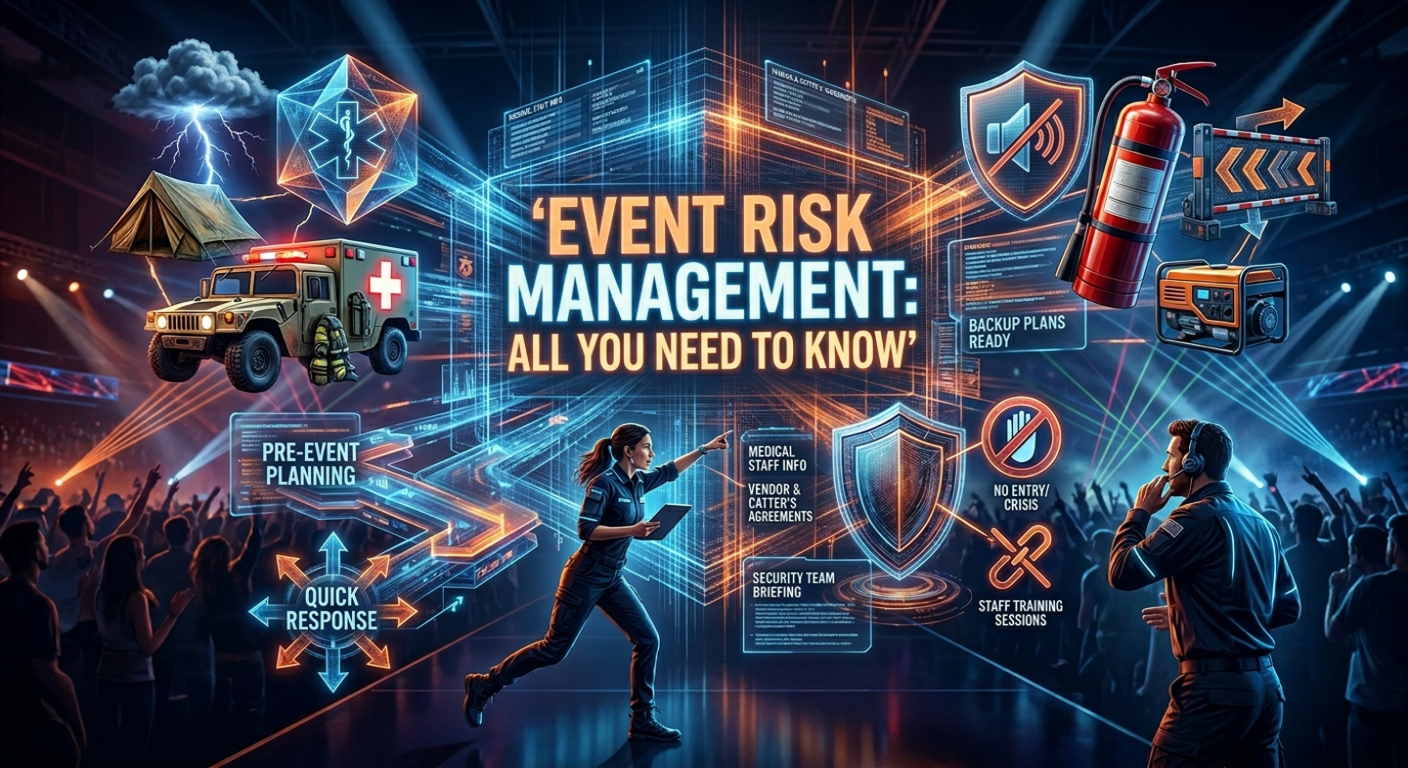
Events bring together a large number of people in a temporary setup, which makes them vulnerable to issues like technical glitches, last-minute cancellations, vendor uncertainties and medical emergencies.
These situations are not uncommon, but how you react to them is all that makes a difference. Preparedness is the key. It helps you deliver safe and successful events. That is why event risk management should be included in the pre-event planning strategy.
In this article, we will take you through a detailed guide on event risk management so that you can create successful events with safety measures.
What is event risk management?
The term event risk management refers to the process of identifying and analyzing the areas that might disrupt the smooth event flow, understanding how serious they are, and taking steps to prevent them promptly. Such event risks include the things that can go wrong during an event.
Common event risks you should know
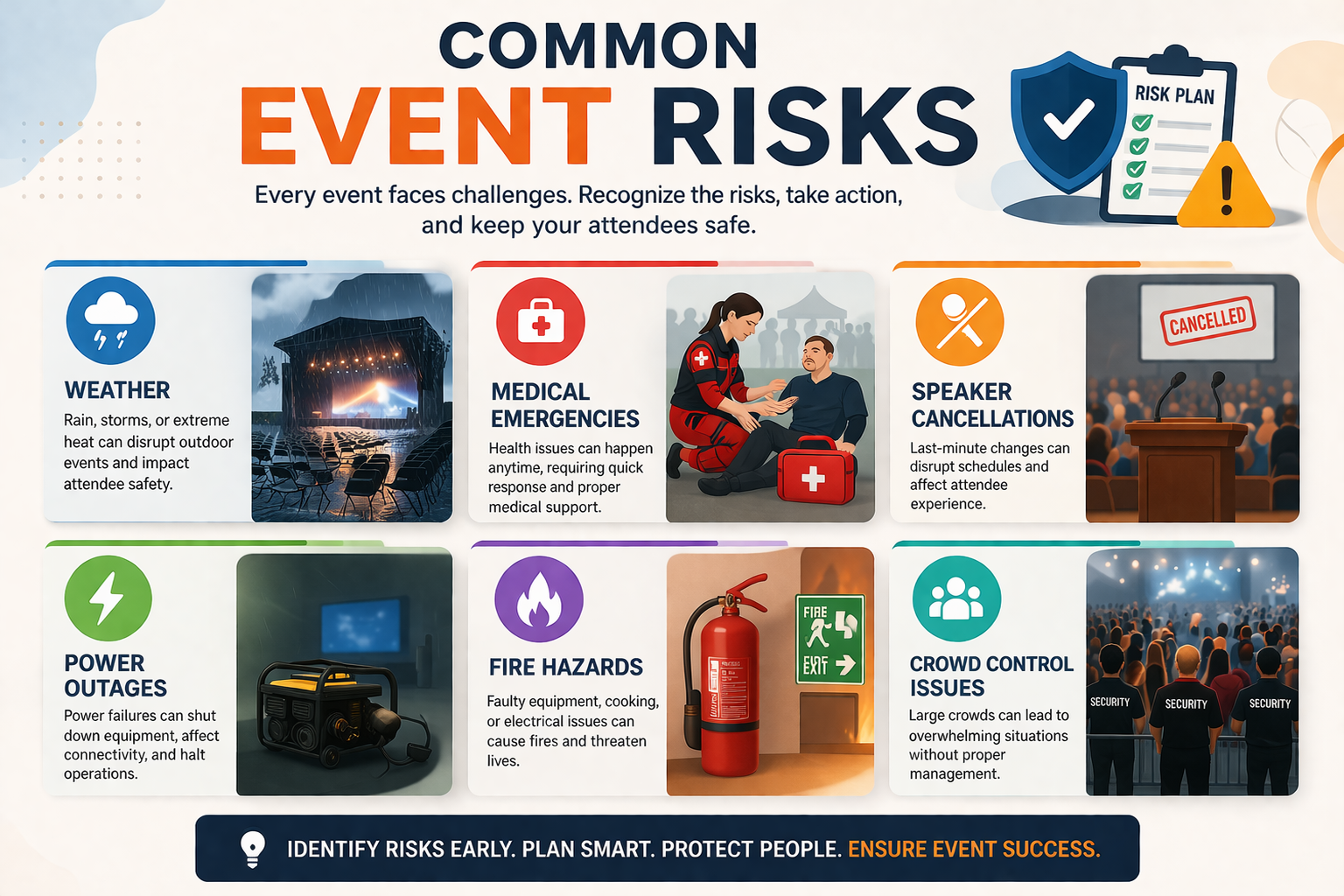
- Bad weather
Weather is unpredictable, and you must be prepared for any unpleasant weather, especially if your event is outdoors. Rainy weather can ruin your setup and make it difficult for attendees to join, and extreme heat can also affect attendee health and mood. To avoid any mishap on the event day due to weather, you must stay prepared.
- Medical emergency
Every event should be well prepared for medical emergencies because such issues can happen in a well-planned event as well. Some of the most common event risks related to medical emergencies include fainting, seizures, minor injuries, allergic reactions, dehydration, and other major health issues.
- A speaker canceling sessions at the last moment
When a speaker cancels his or her session at the last moment, it disrupts the entire event flow and the schedule. Additionally, it annoys attendees, affects engagement levels and reduces business credibility. That is why having backup speakers or a plan B is crucial.
- Power outage
Nowadays, events are mostly technology driven, and a power outage can cause significant problems at your events, including wi-fi disruptions, network issues, slow check-ins, and more. You must have power backup solutions like generators to avoid any event risks related to power.
- Fire hazards
Fire safety is a must for every event. Large crowds, temporary setup, catering services, etc increase the risk of fire accidents in events. Fire safety is one of the most crucial aspects of event risk management that can not be overlooked.
Now that you know about the potential risks your event is surrounded with, let us explore some effective risk management tips to protect your event.
Effective event risk management tips to protect your events
Here are some result-driven risk management strategies that you must follow to protect your events.
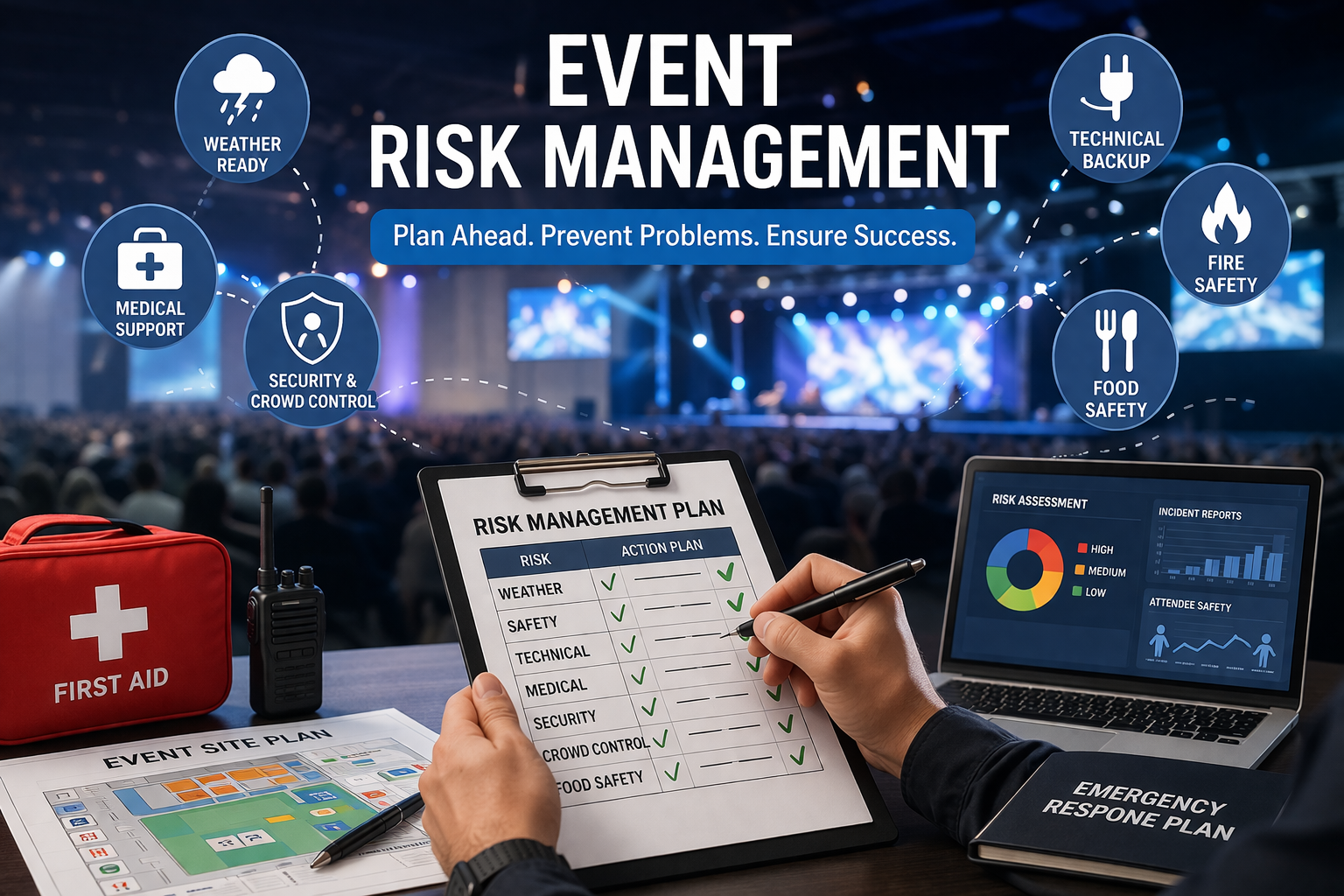
1. Risk assessment
Start your event risk management journey with risk assessment. You need to scrutinize your event venue, type of audiences, and its size to get an idea about the potential risks associated with them.
- Find out the things that could create issues.
- Build a team for security and crowd control.
- Talk to vendors and caterers to avoid any delays.
- Share details of your event with medical staff and keep them prepared for any medical emergencies.
Risk assessment is the first step to identify the areas of your event that may cause disruptions.
2. Build an event risk management team
Event risk management is not a simple task that could be handled alone. It requires a dedicated team for proper execution. Each team member should be responsible for risk management in different event areas.
Consider the following tips:
- Make sure you assign tasks to each member clearly.
- It is better to involve people from various departments like security, logistics, technical etc.
- Each team member should be aware of their roles and responsibilities during an emergency.
- Create a session for your event risk management team before the event to ensure that everyone is trained, and prepared for any type of unexpected situation.
Once you know about the potential risks related to your event, it becomes easier to create a risk management team and explain their roles and responsibilities.
3. Prepare for unpleasant weather
Whether you have your event in a closed ]venue or in the open air, weather conditions should always be taken into consideration as a part of your event risk management journey.
Here are some strategies to stay prepared for unpleasant weather:
- Track weather updates regularly before and during the event through a reliable weather app.
- Make arrangements for a clear evacuation program and ensure that all your staff know the gates and places in your event venue through which attendees could be evacuated safely and quickly.
- Have a Plan B ready for extreme weather. For example, events held outdoors can provide sheltered spaces for attendees, such as tents or indoor alternatives.
Making these arrangements will help you protect your attendees on the event day even if the weather changes its mood suddenly.
4. Fire safety measures
Fire safety is an inseparable part of every event, especially the ones that take place in high temperature.
Here are some essential fire safety measures for your event that you must follow:
- Keep fire extinguisher and fire blankets.
- Mention fire exits clearly and create routes for the same with arrows.
- Show no smoking signs and mark smoking areas if needed.
Fire safety is not optional. No matter how small or big your event is, taking steps to safeguard attendees from any fire incidents is absolutely necessary.
5. Crowd control measures
Taking measures to manage the crowd is crucial for events that invite a huge number of attendees. Ensuring their safety and comfort within the allotted event space is an important event risk management step that every organizer should take seriously.
Consider the following event risk management strategies for effective crowd control:
- Clear instructions for entry and exit points with proper signs.
- Appoint trained security professionals who can manage crowd politely and quickly intervene to tackle any heated situation.
- Create separate spaces for food and activities for different age groups with instructions.
- Make sure to have proper signs and guidelines for different activities and places.
6. Prepare for technical breakdown
As mentioned earlier, most event organizers depend on technology to ensure that their events run smoothly. That is why technical-issues can easily ruin an event causing delays and making attendees frustrated.
Here are some useful event risk management strategies to tackle technical problems :
- Use an event management software that works even when you are offline and offers sincere support.
- Use power backup solutions such as generators.
- Discuss with your IT team for a secure registration system to protect the registration data.
When it comes to WordPress event management software with a secure registration system and offline working abilities, we recommend WP Event Manager as its mobile app works offline and its registration add on streamlines the registration process with 100% safety.
7. Focus on food safety
Food safety is another vital part of event risk management that can make or break your brand reputation. Starting from food-borne illnesses to allergic reactions, a small mistake can pose a major health risk to your attendees.
Here are some food safety tips you must be aware of:
- Ensure that the food suppliers you choose follow the local health and food safety rules and regulations.
- Your catering staff should maintain hygiene by washing hands regularly, wearing gloves and head covers.
- Dont forget to provide allergen details with each food item to avoid any allergic reaction to attendees.
- Storing food in the right temperature is also important to keep the freshness intact.
You can create a food safety checklist to make sure that no step is missed during the preparation.
Wrapping up
Acing event risk management is an art that every event organizer should know. We hope that the event risk management strategies we mentioned here will help you handle them successfully. Starting from risk assessment to food safety, each section of your event deserves the right measure for smooth sailing.
About the Author